
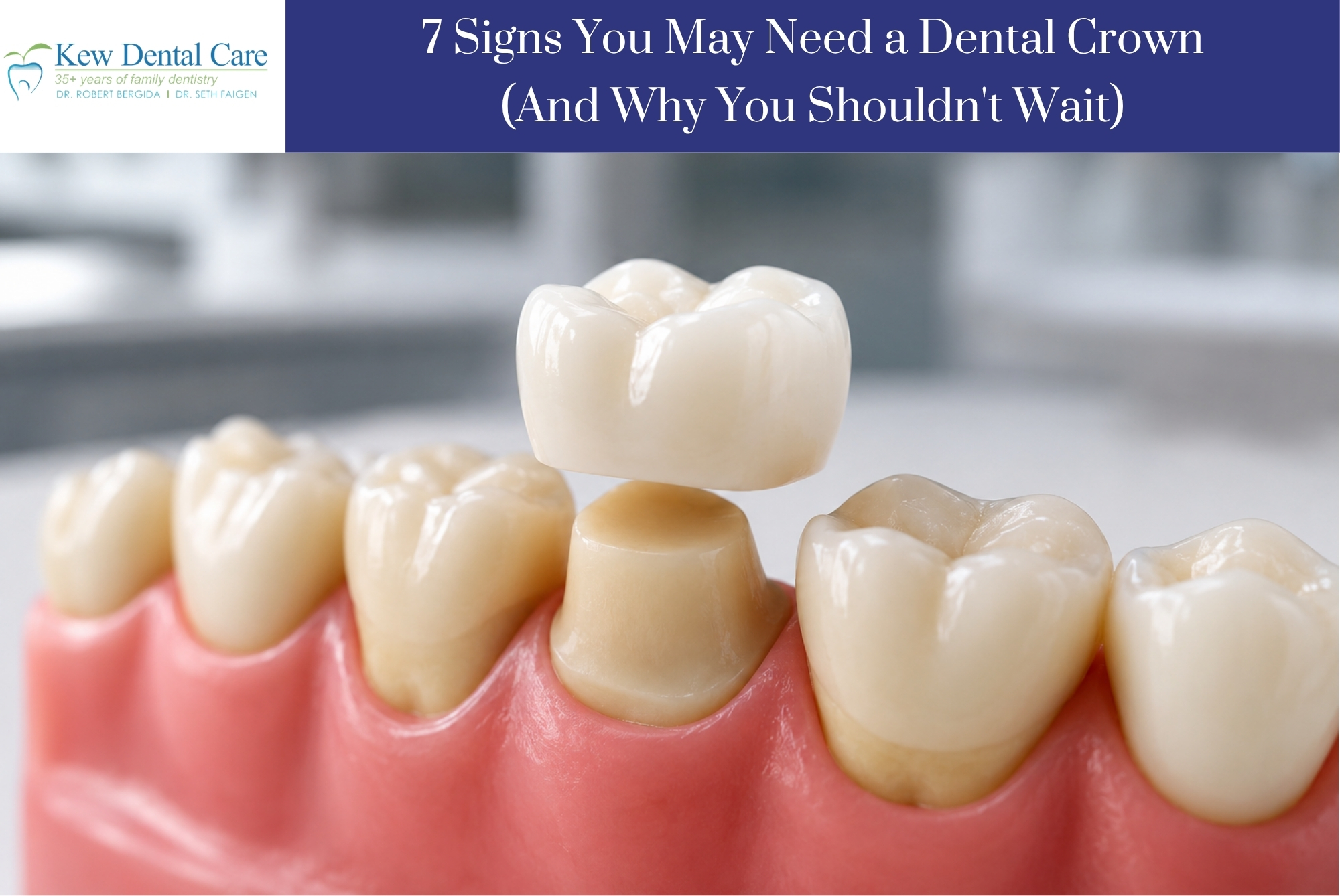
A damaged or weakened tooth does not always need to be removed. In many cases, a dental crown can protect the remaining natural tooth structure, restore normal function, and improve the appearance of your smile. The key is recognizing when a tooth may need additional protection before the damage becomes more extensive.
At Kew Dental Care in Richmond Hill, NY, our dental team evaluates damaged, cracked, worn, and heavily restored teeth to determine whether a crown or another restorative treatment is appropriate. For patients searching for dental crowns in Richmond Hill, NY, understanding the warning signs can help you know when it is time to schedule a dental evaluation.
Dental problems often become more complicated when treatment is postponed. A small fracture can become a larger crack, decay can spread deeper into a tooth, and a weakened tooth may eventually break. Addressing these problems early may help preserve more of your natural tooth and reduce the likelihood of needing more extensive treatment later.
What Is a Dental Crown?
Understanding How Dental Crowns Work
A dental crown is a custom-made restoration designed to cover and protect the visible portion of a tooth. You may sometimes hear a crown referred to as a “cap” because it fits over the prepared tooth and restores its shape, strength, size, and appearance.
Crowns can be made from several dental materials, including ceramic, porcelain-based materials, zirconia, metal alloys, or combinations of materials. The appropriate option depends on factors such as the location of the tooth, biting forces, cosmetic goals, remaining tooth structure, and the patient’s individual oral health needs.
Why Dentists Recommend Crowns
A filling repairs a specific portion of a tooth. A crown provides more extensive coverage. When a significant amount of tooth structure has been damaged or weakened, a filling alone may not provide sufficient support.
A crown may be recommended to protect a weakened tooth, restore a broken tooth, cover a tooth with a large restoration, restore a tooth following root canal therapy, improve certain cosmetic concerns, or complete a dental implant restoration.
The goal is not simply to cover a tooth. A properly planned crown is intended to restore function while helping preserve the natural tooth underneath.
7 Signs You May Need a Dental Crown
1. You Have a Cracked or Fractured Tooth
Cracks are one of the most important reasons to have a tooth evaluated promptly. Teeth can crack because of an injury, biting hard foods or objects, teeth grinding, large existing fillings, or years of normal biting forces.
Some cracks are easy to see, while others are extremely small and may be difficult to identify without a dental examination.
Symptoms can include pain when biting, sensitivity when releasing your bite, temperature sensitivity, or discomfort that seems to come and go.
If enough healthy tooth structure remains, a dental crown may help hold the tooth together and distribute chewing forces more evenly. However, treatment depends on the location and severity of the crack. A crack that extends deeply below the gumline or into the root may require a different treatment approach.
Waiting can allow a crack to enlarge, potentially reducing the chances of preserving the tooth.
2. You Have a Large Filling That Is Weakening the Tooth
Dental fillings are an effective way to repair cavities, but a tooth can become structurally weaker when a large percentage of its natural structure has been replaced by filling material.
Over time, the remaining walls of the tooth may be subjected to considerable chewing forces. They can eventually fracture, particularly in molars and premolars that absorb significant pressure during chewing.
If an existing filling is very large, deteriorating, leaking, or surrounded by weakened tooth structure, your dentist may recommend a crown rather than simply replacing the filling.
A crown can provide more comprehensive coverage and protection for the remaining tooth.
3. Your Tooth Is Severely Worn Down
Teeth are remarkably durable, but they can gradually wear down. Excessive tooth wear may occur because of bruxism (teeth grinding or clenching), an uneven bite, erosion from acids, or other oral health conditions.
Signs of significant tooth wear can include:
- Teeth that appear shorter than they once did
- Flattened chewing surfaces
- Chips along the edges of teeth
- Increased sensitivity
- Changes in your bite
- Jaw discomfort associated with grinding or clenching
When substantial tooth structure has been lost, a crown may sometimes be used to restore the tooth’s shape, height, and function.
However, determining why the tooth became worn is also important. Restoring a tooth without addressing ongoing grinding or another underlying cause may place the new restoration at risk.
Why Worn Teeth Should Be Evaluated
Progressive tooth wear can eventually expose deeper layers of the tooth. This can increase sensitivity and further compromise the tooth’s structural integrity.
A comprehensive dental examination allows your dentist to evaluate both the damaged tooth and the underlying factors contributing to the wear.
4. You Have Extensive Tooth Decay
Small or moderate cavities can often be treated with fillings. When decay becomes extensive, however, there may not be enough strong natural tooth structure remaining to reliably support a traditional filling.
After the decayed tissue has been removed, a crown may be recommended to cover and reinforce the remaining tooth.
Untreated decay does not remain static. Bacteria and decay can progress through the enamel into the dentin and eventually reach the pulp, which contains the tooth’s nerves and blood vessels.
At that stage, the tooth may become painful or infected and could require root canal therapy. In advanced cases, the tooth may no longer be restorable.
This is one reason early diagnosis and treatment of cavities are so important.
5. You Have Had—or Need—Root Canal Treatment
Root canal therapy is performed when the pulp inside a tooth becomes infected, inflamed, or irreversibly damaged. During treatment, the affected pulp is removed, the internal canals are cleaned and disinfected, and the space is sealed.
Afterward, the tooth still needs to withstand everyday biting and chewing.
Depending on the tooth and the amount of remaining natural structure, a crown may be recommended following root canal treatment. This is particularly common for back teeth, which experience substantial chewing forces.
The need for a crown after root canal therapy is not identical for every tooth. Your dentist will evaluate the location of the tooth, how much healthy structure remains, previous restorations, and your bite before recommending the final restoration.
Why the Final Restoration Matters After Root Canal Therapy
Completing the appropriate restoration is an important part of restoring a root canal-treated tooth. Delaying the final restoration can leave a compromised tooth more vulnerable to fracture or contamination.
If you have recently completed root canal therapy, ask your dentist when the tooth should receive its permanent restoration.
6. Part of Your Tooth Has Broken Off
A tooth does not have to split completely in half to require treatment. Sometimes a cusp—the raised portion of a back tooth—breaks away, particularly around an old or large filling.
You may notice a rough edge, a missing piece of tooth, new sensitivity, discomfort while chewing, or food becoming trapped around the damaged area.
Even if the tooth does not hurt, it should be evaluated.
Dental pain is not a reliable measure of how serious structural damage may be. A tooth can lose a substantial amount of structure without producing immediate pain.
When sufficient healthy structure remains, a crown may be able to restore the tooth and protect it from additional damage.
7. Your Tooth Is Misshapen, Severely Discolored, or Structurally Compromised
Crowns are primarily restorative treatments, but they can also improve the appearance of certain teeth.
A crown may be considered when a tooth has significant discoloration that cannot be adequately addressed with whitening, an unusual shape, extensive previous dental work, or structural damage that also creates a cosmetic concern.
The appropriate cosmetic treatment depends on the condition of the tooth. Some concerns may be better addressed with whitening, bonding, veneers, or another procedure.
At Kew Dental Care, an examination can help determine whether a crown provides an appropriate balance of function, protection, and aesthetics.
Why You Shouldn’t Wait If You Think You Need a Crown
Dental Damage Can Progress
One of the challenges with damaged teeth is that they do not repair themselves in the same way that skin or bone can heal. Once significant tooth structure has been lost through decay, fracture, or wear, professional dental treatment is generally necessary to restore it.
A small crack may grow. A weakened cusp can fracture. Decay can spread. A compromised filling can fail.
Treating the problem before additional damage occurs can potentially preserve more healthy tooth structure.
A Restorable Tooth Can Become Non-Restorable
When a damaged tooth is treated at an appropriate stage, a dentist may be able to rebuild and protect it.
If damage extends too deeply into the root or below the supporting bone, saving the tooth can become considerably more difficult or impossible.
In those situations, extraction and tooth replacement may eventually become necessary.
Seeking an evaluation early does not automatically mean you need a crown. It gives your dentist an opportunity to diagnose the problem while more treatment options may still be available.
Pain May Appear Suddenly
A damaged tooth may remain relatively comfortable for weeks or months and then suddenly become painful.
For example, a crack may progress into the pulp, or decay may advance until the nerve becomes inflamed or infected. What could have initially required restorative treatment may then require root canal therapy or another more extensive procedure.
Do not rely on pain alone to determine whether a tooth is healthy.
What Happens During a Dental Crown Evaluation?
Comprehensive Examination
Your dentist will examine the tooth and surrounding tissues and evaluate factors such as existing fillings, cracks, decay, wear, remaining tooth structure, gum health, and your bite.
Dental X-rays may be recommended when necessary to evaluate areas that cannot be adequately assessed visually.
The objective is to determine both the extent of the damage and whether the tooth can be predictably restored.
Determining Whether a Crown Is the Best Treatment
Not every damaged tooth requires a crown.
Depending on the diagnosis, alternatives may include a filling, inlay, onlay, bonding, veneer, root canal treatment followed by restoration, or another procedure.
If the tooth cannot be predictably restored, extraction may sometimes need to be considered.
An individualized treatment plan is important because the correct restoration depends on the condition of the specific tooth rather than symptoms alone.
What to Expect When Getting a Dental Crown
Preparing the Tooth
When a crown is appropriate, the tooth is prepared so the restoration can fit securely over it. Any decay or compromised restorative material is addressed, and the remaining tooth structure is shaped appropriately.
In some cases, additional restorative material may be needed to rebuild portions of a severely damaged tooth before the crown is placed.
Creating the Crown
Measurements or impressions are used to create a restoration designed to fit the prepared tooth and work with the surrounding teeth and bite.
Depending on the treatment method and materials being used, a temporary crown may be placed while the permanent restoration is fabricated.
Placing the Final Crown
The final crown is evaluated for fit, bite, contact with adjacent teeth, and appearance before it is secured.
A properly fitted crown should allow the restored tooth to function comfortably with the rest of your bite.
How Long Do Dental Crowns Last?
Crown Longevity Depends on Several Factors
Dental crowns are designed to be durable, but no restoration should be considered permanent for life.
Longevity depends on the crown material, tooth location, oral hygiene, bite forces, teeth grinding or clenching, diet, and the health of the tooth underneath the restoration.
Good home care and regular dental examinations can help maximize the lifespan of a crown.
Can a Crown Get a Cavity?
The crown itself cannot develop decay, but the natural tooth underneath it can.
Decay may occur around the margin where the crown meets the natural tooth, especially when plaque accumulates in that area.
This makes daily brushing and interdental cleaning important even after a tooth has been crowned.
Caring for a Dental Crown
Maintain Excellent Oral Hygiene
Brush at least twice daily with fluoride toothpaste and clean between your teeth every day with floss or another dentist-recommended interdental cleaner.
Pay particular attention to the area where the crown meets the gumline.
Avoid Using Your Teeth as Tools
Do not use crowned—or natural—teeth to open packages, cut thread, crack shells, or chew ice. These habits can damage both natural teeth and restorations.
Address Teeth Grinding
If you grind or clench your teeth, tell your dentist. Excessive forces can damage crowns and natural teeth.
A custom night guard may be recommended for some patients to help protect their teeth and restorations.
Continue Regular Dental Visits
Routine examinations allow your dentist to monitor the crown, underlying tooth, gum tissue, and bite.
Problems detected early are often easier to manage than those discovered after significant symptoms develop.
Dental Crowns in Richmond Hill, NY
Restoring Damaged Teeth at Kew Dental Care
If you have a cracked, broken, heavily filled, decayed, or worn tooth, scheduling an evaluation can help determine whether a crown is necessary.
At Kew Dental Care, patients seeking dental crowns in Richmond Hill, NY can receive an individualized assessment based on their tooth structure, oral health, functional needs, and treatment goals.
The purpose of restorative dentistry is not simply to address today’s discomfort. Whenever possible, treatment should help preserve natural tooth structure, restore comfortable function, and support long-term oral health.
If something about a tooth feels different—even if you are not experiencing severe pain—it is worth having it examined.
Frequently Asked Questions About Dental Crowns
How do I know if I really need a dental crown?
You cannot always determine this from symptoms alone. A dentist needs to assess how much healthy tooth structure remains, whether cracks or decay are present, the condition of existing restorations, and how the tooth functions within your bite.
Does needing a crown mean my tooth is badly damaged?
Not necessarily. Crowns are often recommended specifically to prevent a weakened tooth from becoming more severely damaged. Receiving a crown can be a preventive restorative step when the tooth is still salvageable.
Is a crown better than a filling?
Neither treatment is universally “better.” They serve different purposes. Fillings are generally appropriate when enough healthy tooth structure remains to support the restoration. Crowns provide more extensive coverage when the tooth requires greater structural reinforcement.
Can I wait if my tooth doesn’t hurt?
A lack of pain does not necessarily indicate a healthy tooth. Cracks, decay, deteriorating fillings, and weakened tooth structure may initially cause few or no symptoms. Waiting until significant pain develops can allow the condition to become more complicated.
Does a cracked tooth always require a crown?
No. Treatment depends on the type, depth, and location of the crack. Some minor damage may require a less extensive restoration, while severe cracks may extend too deeply for a crown to save the tooth. A dental examination is necessary to determine the appropriate treatment.
Do I need a crown after every root canal?
Not every root canal-treated tooth automatically requires a crown. However, crowns are frequently recommended for posterior teeth because they experience substantial chewing forces. The amount of remaining natural tooth structure and the tooth’s location are important considerations.
Can a crown save a broken tooth?
In many cases, yes, provided enough healthy tooth structure remains and the fracture has not extended into an area that makes the tooth non-restorable. The sooner a broken tooth is evaluated, the better the opportunity to determine whether it can be preserved.
What happens if I delay getting a recommended crown?
The weakened tooth may fracture further, decay may progress, or the pulp may become involved. Depending on what happens, treatment could become more extensive and may include root canal therapy or extraction.
Can a tooth decay underneath a crown?
Yes. Natural tooth structure remains underneath the crown, and decay can develop near the crown margin. Consistent brushing, flossing or interdental cleaning, and routine dental care remain essential.
Can dental crowns look natural?
Modern tooth-colored crown materials can be designed to closely coordinate with the shape and shade of surrounding teeth. The appropriate material depends on the location of the tooth, functional requirements, and aesthetic goals.
Can I eat normally with a crown?
Once treatment is complete and your dentist has provided clearance, a permanent crown is generally designed to function as part of your normal bite. Patients should still avoid habits that can damage teeth, such as chewing ice or biting extremely hard objects.
What should I do if my crown feels loose?
Contact your dentist promptly. Avoid chewing on that side and do not attempt to permanently reattach the crown yourself. A loose crown can allow bacteria and debris to reach the underlying tooth.
What should I do if my crown falls off?
Keep the crown if possible and contact your dental office. Do not use household glue or other non-dental adhesives. Your dentist will need to examine the tooth and determine whether the crown can be recemented or whether another restoration is necessary.
How should I clean around a dental crown?
Brush the crown as you would your natural teeth and carefully clean along the gumline. Floss or use another recommended interdental cleaning method every day to remove plaque and food debris between teeth.
When should I schedule an appointment for a damaged tooth?
Schedule an evaluation when you notice a crack, chip, broken filling, persistent sensitivity, discomfort when biting, visible decay, or another change in a tooth. Severe pain, facial swelling, trauma, or signs of infection warrant more urgent dental attention.
Protect Your Natural Tooth Before the Problem Gets Worse
A dental crown can play an important role in preserving a tooth that has become weakened by decay, fracture, wear, a large filling, or previous treatment. However, timing matters.
The longer structural dental damage remains untreated, the greater the possibility that additional tooth structure will be lost.
If you recognize one or more of these seven signs, contact Kew Dental Care to schedule an evaluation. An examination can determine whether you need a crown or whether another restorative option is better suited to your needs.
Contact Information
Kew Dental Care
116-14 Metropolitan Ave
Richmond Hill, NY 11418
Phone: (718) 849-9472
Website: kewdentalcare.com
Appointments: kewdentalcare.com/appointments/