
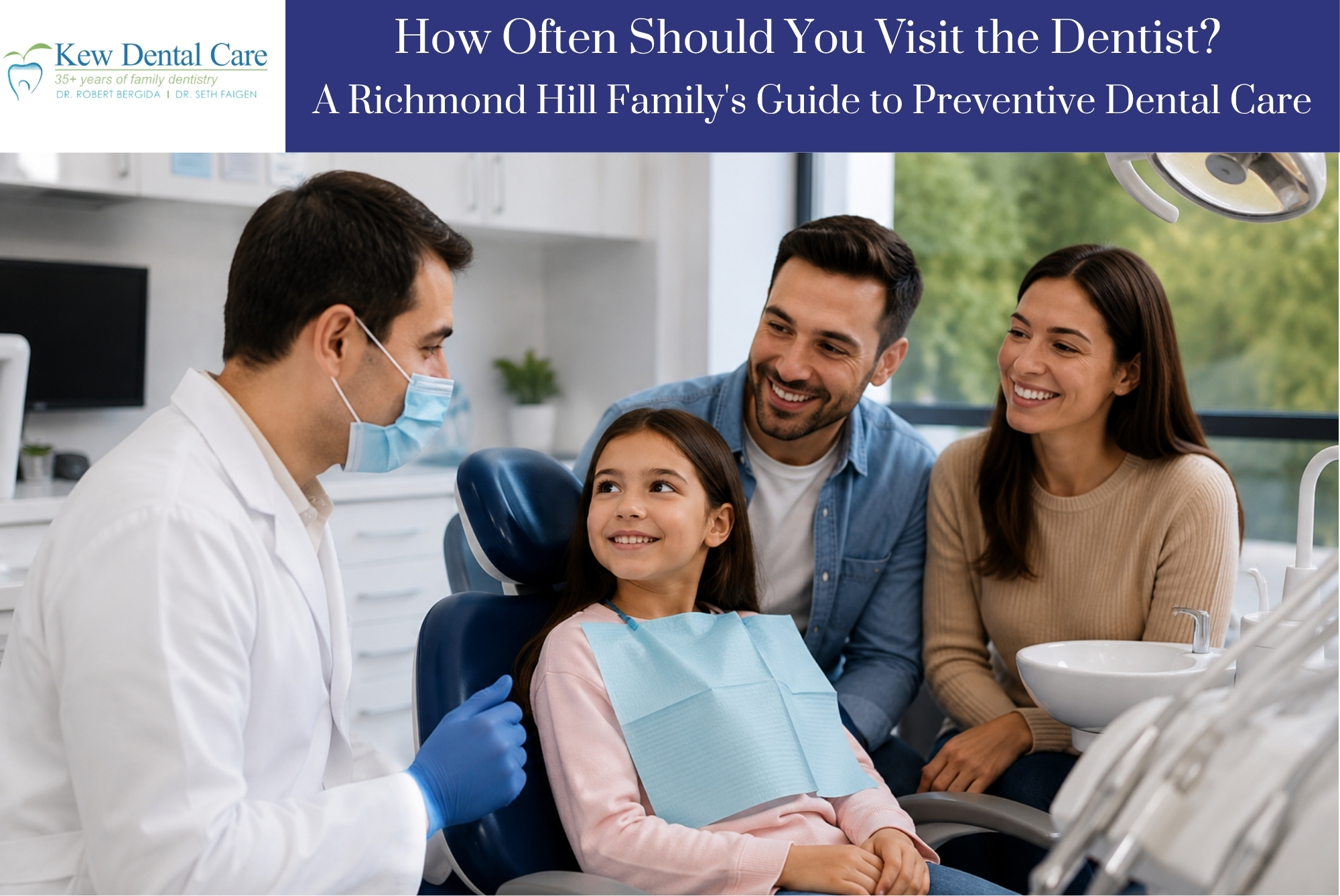
Regular dental visits are one of the most important parts of maintaining a healthy smile at every stage of life. While brushing and flossing at home are essential, professional dental care provides another level of prevention by identifying concerns that may not be visible or noticeable until they become more serious.
For individuals and families looking for a dentist in Richmond Hill NY, understanding how often to schedule dental visits can help prevent cavities, gum disease, tooth loss, and other oral health problems. At Kew Dental Care, preventive dentistry focuses on maintaining healthy teeth and gums while identifying potential concerns as early as possible.
Although many patients benefit from visiting the dentist approximately every six months, there is no single schedule that is appropriate for everyone. Age, oral health, medical history, gum health, cavity risk, lifestyle, and previous dental treatment can all influence how frequently a patient should receive professional dental care.
This guide explains how often adults and children should visit the dentist, what happens during preventive appointments, and why routine dental care is an important investment in long-term oral and overall health.
Why Are Regular Dental Visits Important?
Prevention Is More Effective Than Waiting for Symptoms
One of the primary goals of preventive dentistry is to identify oral health concerns before they become painful, complicated, or difficult to treat. Many dental conditions develop gradually and may initially produce few or no symptoms.
For example, a small cavity may not cause pain. Early gum disease may produce only mild bleeding when brushing. A cracked tooth may not become noticeable until the crack progresses.
Regular dental examinations give your dental team opportunities to detect these concerns at earlier stages.
Early detection may allow for more conservative treatment while helping patients preserve more of their natural tooth structure.
Professional Cleanings Reach Areas Brushing May Miss
Even patients who brush and floss carefully can develop plaque and tartar in difficult-to-reach areas.
Plaque is a sticky biofilm containing bacteria. When plaque remains on teeth, minerals in saliva can cause it to harden into calculus, commonly called tartar. Once tartar forms, ordinary brushing and flossing generally cannot remove it effectively.
Professional dental cleanings help remove plaque, tartar, and surface stains from teeth while supporting healthier gums.
Dental Exams Evaluate More Than Cavities
A comprehensive dental examination can involve much more than checking for tooth decay. Depending on the patient’s individual needs, a dentist may evaluate the teeth, gums, bite, existing restorations, jaw, and other oral structures.
Routine dental care can help identify signs of:
- Tooth decay
- Gum disease
- Cracked or damaged teeth
- Worn dental restorations
- Tooth grinding or clenching
- Bite problems
- Changes involving oral tissues
- Tooth mobility
- Dental infections
- Other abnormalities requiring further evaluation
Preventive dental appointments therefore play an important role in monitoring changes in oral health over time.
How Often Should Most People Visit the Dentist?
The Traditional Six-Month Schedule
Many children and adults are familiar with the recommendation to schedule dental checkups and cleanings approximately twice a year.
For many people with relatively healthy teeth and gums, a six-month interval provides an appropriate opportunity for professional cleaning, examination, and ongoing monitoring.
However, the six-month schedule should not be considered an absolute rule for every patient.
Dental Visit Frequency Should Be Based on Individual Risk
Modern preventive dentistry increasingly emphasizes individualized care. Some people may need more frequent visits because they have a greater risk of dental disease.
Your dentist may recommend appointments more frequently if you have factors such as:
- A history of frequent cavities
- Active gum disease
- Previous periodontal treatment
- Significant plaque or tartar accumulation
- Dry mouth
- Certain dental restorations
- Dental implants requiring monitoring
- Orthodontic appliances
- Certain medical conditions or medications affecting oral health
- Tobacco use
- Difficulty maintaining adequate oral hygiene
- A history of significant dental problems
The appropriate frequency should be determined based on your current oral health and professional recommendations.
How Often Should Children Visit the Dentist?
Establishing Preventive Care Early
Children benefit from regular dental care because their mouths change rapidly as primary teeth erupt, permanent teeth develop, and the jaw grows.
Routine visits allow the dentist to monitor tooth development and identify concerns that could affect a child’s oral health.
Regular appointments also help children become familiar with the dental environment. Positive early experiences may help establish healthy attitudes toward dental care that continue into adulthood.
Preventing Childhood Cavities
Children can develop tooth decay relatively quickly, particularly when frequent exposure to sugary foods or beverages is combined with inadequate brushing.
During preventive appointments, parents may receive guidance about:
- Age-appropriate brushing
- Flossing
- Fluoride
- Diet and snacking
- Dental sealants
- Thumb sucking or pacifier habits
- Tooth eruption
- Sports-related dental protection
- Orthodontic development
A dentist can recommend an appropriate recall schedule based on the child’s individual cavity risk and oral health.
How Often Should Teenagers Visit the Dentist?
Teenagers Have Unique Oral Health Challenges
Adolescence brings changes in diet, schedules, independence, and oral hygiene habits. Teenagers may also consume more sugary or acidic drinks and snacks.
Orthodontic treatment can create additional challenges because brackets and wires can make plaque removal more difficult.
Routine dental visits provide opportunities to monitor these changes and reinforce healthy habits.
Sports and Dental Injuries
Teenagers participating in contact or collision sports may also benefit from discussions about mouthguards and dental injury prevention.
A dentist can help families understand appropriate protection based on the child’s activities and dental development.
How Often Should Adults Visit the Dentist?
Preventive Care Remains Important Throughout Adulthood
Adults should not assume that dental appointments are necessary only when something hurts.
Many oral diseases can progress without significant pain during their early stages. Routine preventive appointments allow the dentist to monitor changes and intervene when appropriate.
Adults may also have fillings, crowns, bridges, implants, or other dental restorations that require ongoing evaluation.
Gum Health Becomes Increasingly Important
Periodontal disease is an important concern in adult dentistry. Gingivitis, the earliest form of gum disease, can involve redness, swelling, and bleeding.
If periodontal disease progresses, the tissues and bone supporting the teeth can become affected.
Patients with a history of periodontal disease may require a maintenance schedule that is more frequent than standard preventive visits.
How Often Should Older Adults Visit the Dentist?
Aging Can Change Oral Health Needs
Older adults may experience different oral health challenges, including dry mouth, gum recession, exposed root surfaces, tooth wear, missing teeth, and complications associated with dental restorations.
Medications can also affect saliva production. Reduced saliva can increase vulnerability to tooth decay because saliva helps neutralize acids and protect oral tissues.
Dentures and Dental Implants Still Require Dental Visits
People with partial dentures, complete dentures, or dental implants still benefit from routine professional dental care.
Dentists can evaluate the fit and condition of removable prostheses, examine oral tissues, and monitor implants and surrounding tissues.
Having fewer natural teeth does not eliminate the need for preventive oral healthcare.
What Happens During a Preventive Dental Visit?
Review of Your Dental and Medical History
Your dental team may ask whether you have experienced changes involving your teeth, gums, medications, medical conditions, or overall health.
This information is important because oral health and systemic health can influence one another.
Professional Dental Cleaning
During a routine cleaning, plaque and tartar are removed from the teeth. The teeth may also be polished to remove certain surface stains and deposits.
Professional cleanings complement daily brushing and flossing rather than replacing them.
Dental Examination
The dentist evaluates the teeth and surrounding structures for evidence of disease, damage, or other changes.
Existing fillings, crowns, bridges, implants, and other restorations may also be examined.
Gum Evaluation
Healthy gums are essential for supporting the teeth. Your dental team may evaluate gum tissue for signs of inflammation, recession, bleeding, or periodontal disease.
When appropriate, measurements around the teeth may be taken to evaluate periodontal health.
Dental X-Rays When Appropriate
Dental X-rays can provide information that cannot always be obtained through visual examination alone.
They may help identify concerns involving areas between teeth, tooth roots, supporting bone, developing teeth, or other structures.
X-rays are generally recommended according to an individual’s age, dental history, symptoms, and risk factors rather than automatically being required at every visit.
Why You Shouldn’t Wait Until a Tooth Hurts
Pain Is Not an Early Warning Sign for Every Dental Problem
A common misconception is that healthy-feeling teeth do not require dental evaluation.
Unfortunately, pain often occurs only after certain dental problems have progressed.
A cavity, for example, may initially affect the outer layers of a tooth without causing noticeable symptoms. As decay progresses deeper toward the pulp, sensitivity or pain may become more likely.
Similarly, periodontal disease can progress significantly without causing severe discomfort.
Preventive dental care aims to identify problems before pain becomes the reason for seeking treatment.
What Happens If You Skip Dental Visits?
Plaque and Tartar Can Continue Accumulating
Without professional cleanings, tartar may continue building around teeth and near the gumline.
This accumulation can contribute to inflammation and make effective home cleaning more difficult.
Small Cavities May Become Larger
Dental decay does not typically resolve on its own after a cavity has formed. Untreated decay may continue progressing deeper into the tooth.
More advanced decay can require more extensive treatment than an early cavity.
Gum Disease Can Progress
Early gum inflammation may progress to more significant periodontal problems in susceptible individuals.
Regular monitoring is particularly important for people with known periodontal disease or risk factors.
Dental Problems May Become More Complex
Preventive appointments can sometimes identify damaged restorations, worn teeth, cracks, or other concerns before they result in significant symptoms.
Delaying evaluation may allow some problems to become more complicated.
How Oral Health Can Relate to Overall Health
The Mouth Is Part of the Body
Oral health should not be viewed separately from general health. Researchers continue to study relationships between oral conditions and systemic diseases.
For example, diabetes and periodontal disease have a well-established bidirectional relationship: diabetes can increase the risk and severity of periodontal disease, while periodontal inflammation can complicate glycemic management.
Regular dental care can therefore be an important component of comprehensive healthcare, particularly for patients managing chronic health conditions.
Medications Can Affect Oral Health
Certain medications may cause dry mouth or other oral changes.
Patients should keep their dentist informed about prescription medications, over-the-counter medications, supplements, and changes in medical history.
What Can You Do Between Dental Visits?
Brush Thoroughly Twice a Day
Brush your teeth twice daily using fluoride toothpaste unless your dentist recommends otherwise.
Carefully clean all tooth surfaces and along the gumline.
Clean Between Your Teeth Daily
Toothbrush bristles cannot effectively clean every surface between teeth.
Floss, interdental brushes, water flossers, or other interdental cleaning methods may be recommended depending on your individual needs.
Limit Frequent Sugar Exposure
The frequency of sugar consumption can influence cavity risk. Bacteria in dental plaque metabolize fermentable carbohydrates and produce acids that can contribute to demineralization of tooth enamel.
Limiting frequent sugary snacks and beverages can support cavity prevention.
Drink Water
Water helps rinse the mouth and can be a healthier alternative to sugary or acidic beverages.
Pay Attention to Changes
Contact your dentist if you notice persistent pain, swelling, bleeding, sensitivity, loose teeth, broken restorations, changes in your bite, or unusual changes in your mouth.
Do not necessarily wait until your next scheduled preventive appointment if a new problem develops.
Choosing a Dentist in Richmond Hill NY for Your Family
Consistency Helps Build a Long-Term Dental History
Establishing care with a dental practice allows your dental team to monitor changes over time.
Previous examinations, dental X-rays, periodontal findings, restorations, and treatment history provide useful information when evaluating new concerns.
For families, having an established dental home can also make it easier to maintain preventive care schedules for both adults and children.
Preventive Dentistry Is a Partnership
Successful preventive care involves both professional dental services and effective home care.
Your dentist and dental hygienist can provide recommendations, but daily brushing, interdental cleaning, dietary choices, and adherence to recommended appointments are equally important.
At Kew Dental Care, patients in Richmond Hill and surrounding communities can receive individualized guidance based on their oral health needs.
How Do You Know When You’re Due for a Dental Visit?
If it has been approximately six months since your previous dental checkup, you may be due for preventive care depending on the schedule recommended by your dentist.
You should also consider scheduling an appointment if:
- You cannot remember your last dental examination
- Your gums bleed frequently
- You have persistent bad breath
- A tooth has become sensitive
- You experience pain when chewing
- A filling or crown feels different
- You notice swelling around a tooth or your gums
- You have a chipped or cracked tooth
- Your teeth feel loose
- You notice a new or persistent change inside your mouth
New symptoms should be evaluated based on their nature and severity rather than waiting for the next routine appointment.
Frequently Asked Questions About Preventive Dental Care
How often should I visit the dentist?
Many patients benefit from dental examinations and professional cleanings approximately every six months. However, your ideal schedule depends on your individual oral health, cavity risk, gum health, medical history, and previous dental treatment.
Does everyone need a dental cleaning every six months?
Not necessarily. Six months is a common preventive interval, but some patients may require more frequent professional care. Your dentist can recommend an appropriate schedule after evaluating your oral health.
Why might my dentist recommend visits every three or four months?
More frequent visits may be recommended for patients with periodontal disease, significant tartar accumulation, high cavity risk, or other oral health concerns. Periodontal maintenance schedules, in particular, may differ from routine preventive cleaning schedules.
Should children visit the dentist every six months?
Many children follow approximately six-month preventive schedules, but the appropriate frequency depends on the child’s oral health and cavity risk. Your child’s dentist can provide an individualized recommendation.
Do I still need dental appointments if I brush and floss every day?
Yes. Excellent home care significantly reduces dental disease risk, but professional examinations can identify concerns that may not be apparent at home. Professional cleanings can also remove hardened tartar that brushing cannot effectively remove.
Do I need to see a dentist if nothing hurts?
Yes. Many dental conditions do not cause pain during their early stages. Preventive examinations are designed to identify problems before they become symptomatic whenever possible.
How often should people with gum disease see a dentist?
The recommended interval depends on the severity and history of periodontal disease. Some patients receiving periodontal maintenance may need appointments more frequently than every six months. Your dentist or periodontal provider should determine the appropriate schedule.
How often should I get dental X-rays?
There is no universal X-ray schedule appropriate for every patient. Dental X-rays should be based on factors such as age, oral health, symptoms, disease risk, and previous findings.
Are regular dental visits important during pregnancy?
Yes. Maintaining oral health is important during pregnancy, and hormonal changes can affect gum tissues. Patients who are pregnant or planning pregnancy should tell their dentist so that care can be appropriately coordinated.
Do older adults need more frequent dental visits?
Some older adults may benefit from more frequent appointments because of dry mouth, gum disease, exposed root surfaces, extensive restorations, medications, or other risk factors. Age alone does not determine the appropriate schedule.
Do people with dentures still need dental checkups?
Yes. Dental visits remain important even for people with complete dentures. A dentist can examine oral tissues, evaluate denture fit and function, and identify changes that may require attention.
Do dental implants require routine professional care?
Yes. Dental implants and the tissues surrounding them require ongoing home care and professional monitoring. Your dentist can recommend appropriate maintenance based on your implant health and individual risk factors.
What if I haven’t been to the dentist in several years?
Schedule an examination rather than continuing to postpone care. Your dentist can evaluate your current oral health and develop a personalized treatment and preventive care plan based on the findings.
Can preventive dental care save teeth?
Preventive care can reduce the risk of many conditions that threaten natural teeth. Early identification and management of tooth decay, gum disease, damaged restorations, and other problems may improve the likelihood of preserving natural teeth.
When should I call the dentist instead of waiting for my routine appointment?
Contact a dental professional when you experience persistent tooth pain, swelling, trauma, a broken tooth, a lost restoration, significant sensitivity, or another concerning change. Severe swelling, difficulty breathing or swallowing, uncontrolled bleeding, or significant facial trauma may require urgent medical attention.
Make Preventive Dental Care Part of Your Family’s Routine
There is no universal dental schedule that works for every person. While approximately six-month visits are common for many patients, the ideal frequency should reflect individual risk factors, oral health history, age, gum health, and current dental needs.
Regular examinations, professional cleanings, effective home hygiene, and early evaluation of new symptoms form the foundation of preventive dentistry.
If you are searching for a dentist in Richmond Hill NY, Kew Dental Care can help you establish an individualized preventive care schedule designed to protect your teeth and gums over the long term.
Rather than waiting for discomfort to determine when you see a dentist, make preventive care a routine part of your family’s approach to health.
Contact Information
Kew Dental Care
116-14 Metropolitan Ave
Richmond Hill, NY 11418
Phone: (718) 849-9472
Website: kewdentalcare.com
Appointments: kewdentalcare.com/appointments/