
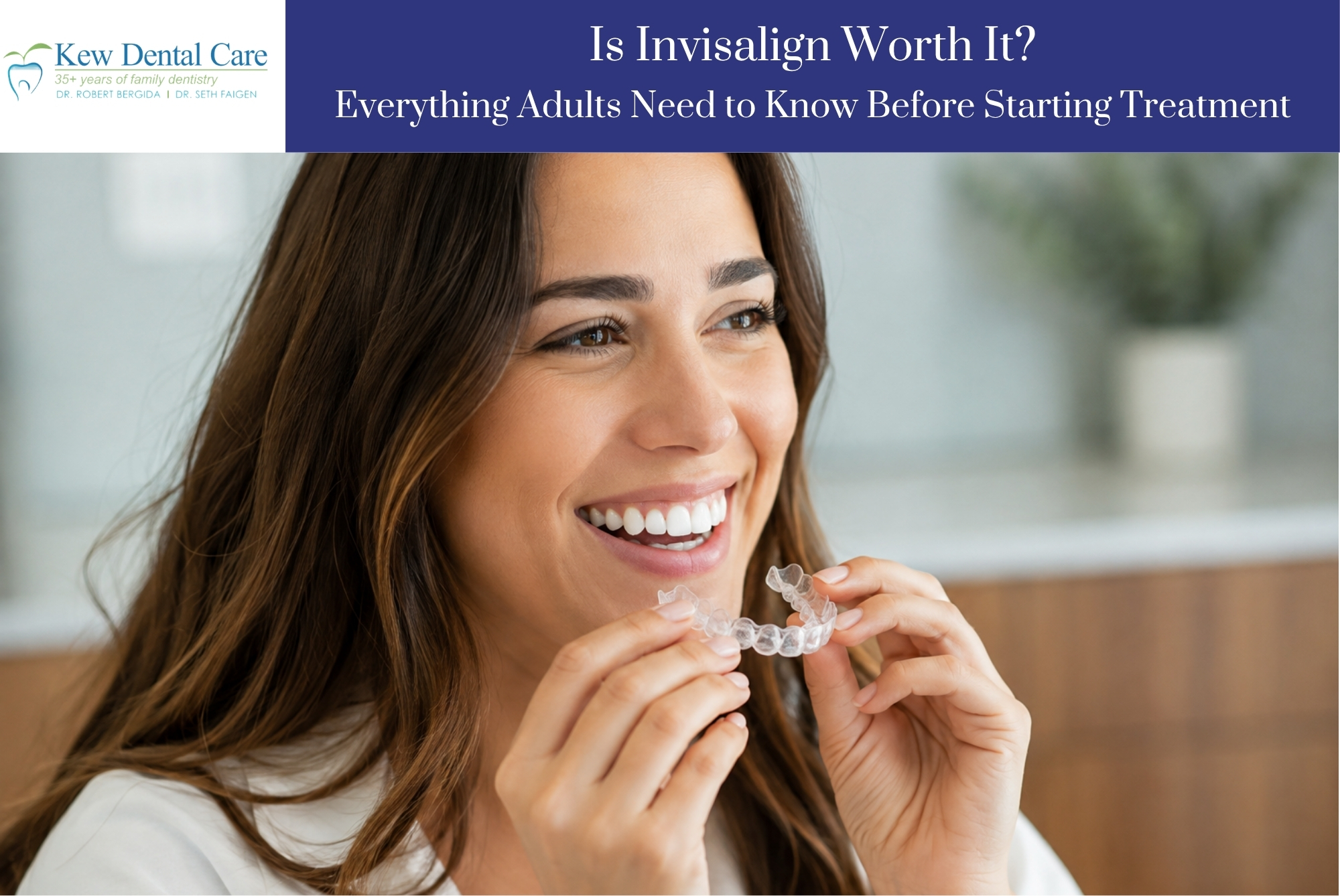
 For many adults, the idea of improving their smile is appealing, but the thought of wearing traditional metal braces can make orthodontic treatment feel less practical. Professional responsibilities, social events, family commitments, and personal preferences can all influence the decision to pursue treatment. Invisalign offers an alternative that allows many adults to straighten their teeth using a series of clear, removable aligners.
If you are researching Invisalign in Richmond Hill, NY, you may be wondering whether the treatment is truly worth the investment of time, effort, and cost. The answer depends on your orthodontic needs, treatment goals, oral health, and willingness to follow your prescribed aligner schedule.
At Kew Dental Care, patients can receive a professional evaluation to determine whether Invisalign is appropriate for their individual needs. Understanding how Invisalign works, what it can address, and what treatment requires can help you make a more informed decision about your smile.
What Is Invisalign?
Understanding Clear Aligner Therapy
Invisalign is an orthodontic treatment system that uses a sequence of customized clear aligners to gradually reposition the teeth. Rather than relying on metal brackets and wires, Invisalign aligners apply carefully planned forces to selected teeth as treatment progresses.
Patients typically move through multiple sets of aligners. Each aligner represents a stage in the overall treatment plan and is designed to move the teeth incrementally toward their intended positions.
The aligners are removable, but successful treatment generally requires consistent daily wear according to the dentist’s instructions.
How Invisalign Differs From Traditional Braces
Traditional braces use brackets attached to the teeth and wires that guide tooth movement. Invisalign uses removable trays made to fit closely over the teeth.
For adults, one of the most noticeable differences is appearance. Clear aligners are less conspicuous than conventional metal braces. Their removability can also make eating, brushing, and flossing more convenient.
However, removable aligners require patient cooperation. Because the system works only while the aligners are being worn, consistently leaving them out for extended periods may interfere with treatment progress.
Why Are More Adults Choosing Invisalign?
A More Discreet Approach to Orthodontic Treatment
Adults may hesitate to pursue orthodontic care because they do not want braces to become a prominent part of their professional or social appearance. Invisalign’s clear design makes orthodontic treatment less noticeable.
Although aligners are not completely invisible, they are designed to fit closely against the teeth and can be relatively subtle during everyday activities.
Treatment That Fits an Adult Lifestyle
Because Invisalign aligners can be removed temporarily, patients can generally continue eating the foods they enjoy without the same dietary restrictions associated with fixed braces.
The aligners are removed for meals and beverages other than water, according to professional instructions, and then replaced after the teeth have been cleaned.
Easier Access for Brushing and Flossing
Maintaining oral hygiene is especially important during orthodontic treatment. Fixed orthodontic appliances can create additional areas where plaque and food debris accumulate.
With Invisalign, patients can remove their aligners and brush and floss their teeth normally. This does not eliminate the need for excellent oral hygiene, but it can make daily cleaning more straightforward.
What Dental Problems Can Invisalign Correct?
Crowded Teeth
Dental crowding occurs when there is insufficient space for the teeth to align properly. Teeth may overlap, rotate, or emerge outside the ideal dental arch.
Depending on the severity and underlying anatomy, Invisalign may be used to improve many cases of mild to moderate crowding and selected more complex cases.
Gaps Between Teeth
Excess spacing can occur because of differences between tooth size and jaw size, missing teeth, tooth position, or other factors.
In appropriate cases, clear aligners can gradually close unwanted spaces and improve alignment.
Overbite
An overbite describes excessive vertical overlap of the upper and lower front teeth. Some cases can be treated using clear aligners, although treatment recommendations depend on the cause and severity of the bite discrepancy.
Underbite
An underbite occurs when the lower teeth extend in front of the upper teeth when the mouth is closed. Certain dental underbites may be treated or improved with Invisalign, while significant skeletal discrepancies may require additional orthodontic or surgical approaches.
Crossbite
A crossbite occurs when one or more upper teeth bite inside the lower teeth rather than outside them. Depending on the type of crossbite, Invisalign may be incorporated into treatment.
Open Bite
With an open bite, some upper and lower teeth do not contact when the mouth is closed. Clear aligners may help correct selected open-bite cases by strategically repositioning the teeth.
Is Invisalign Worth It for Adults?
The Value Goes Beyond Appearance
Adults often begin orthodontic treatment because they want a straighter smile, but alignment can have functional and oral-health implications as well.
Crowded or significantly overlapping teeth may create areas that are more difficult to brush and floss effectively. Certain bite problems can also affect how forces are distributed across the teeth.
Correcting alignment does not guarantee freedom from future dental problems, but properly aligned teeth may be easier for some patients to maintain.
Confidence Can Be an Important Consideration
The appearance of your smile can influence how comfortable you feel smiling in photographs, speaking with others, or participating in professional and social situations.
Although cosmetic goals are subjective, they are legitimate factors when deciding whether orthodontic treatment is worthwhile.
Long-Term Value Depends on Retention
Orthodontic treatment does not end when the last active aligner is completed. Teeth naturally have a tendency to shift over time.
Retainers are therefore an essential part of maintaining orthodontic results. Patients considering Invisalign should view long-term retention as part of the treatment process rather than an optional extra.
What Is Invisalign Treatment Like?
Step 1: The Initial Consultation
The first step is a comprehensive dental and orthodontic evaluation. Your dentist assesses your teeth, bite, gums, and overall oral health and discusses what you would like to change about your smile.
Not every patient is automatically an Invisalign candidate. A professional assessment helps determine whether clear aligners can predictably address your specific concerns.
Step 2: Digital Treatment Planning
Digital scans, photographs, X-rays, and other diagnostic information may be used to evaluate tooth position and create an individualized treatment plan.
Advanced digital planning allows the provider to map anticipated tooth movements throughout treatment.
Step 3: Receiving Your Aligners
Once your customized aligners are manufactured, you will receive instructions about how and when to wear them.
Patients typically progress through a prescribed sequence rather than using one aligner for the entire treatment.
Step 4: Wearing Your Aligners Consistently
Invisalign generally requires aligners to be worn for approximately 20 to 22 hours per day, unless your dental provider gives you different instructions.
Aligners are usually removed for eating, drinking beverages other than water, brushing, and flossing.
Compliance is one of the most important factors in successful clear aligner treatment. Wearing the trays significantly less than prescribed may slow progress or prevent teeth from tracking as planned.
Step 5: Regular Progress Evaluations
Periodic dental visits allow your provider to evaluate tooth movement and confirm that treatment is progressing appropriately.
Treatment plans sometimes require modifications or additional aligners, often called refinements, to achieve the desired result.
Step 6: Retainers After Invisalign
Once active treatment is complete, retainers help preserve the new positions of the teeth.
Your provider will explain how frequently and how long retainers should be worn based on your individual circumstances.
How Long Does Invisalign Take?
Treatment Time Is Different for Every Patient
There is no universal Invisalign timeline. Treatment duration depends on factors such as:
- The complexity of tooth movement required
- The severity of crowding or spacing
- The type of bite correction needed
- How consistently the aligners are worn
- How the teeth biologically respond to orthodontic forces
- Whether refinements are necessary
Minor alignment corrections may require less time than comprehensive treatment involving multiple bite and tooth-position concerns.
An individualized examination is the best way to obtain a realistic treatment estimate.
Does Invisalign Hurt?
Temporary Pressure Is Normal
Invisalign is designed to move teeth, so patients can experience temporary pressure or tenderness, particularly after changing to a new set of aligners.
This sensation is generally associated with the forces responsible for tooth movement and often decreases as the mouth adapts.
Your Mouth May Need Time to Adjust
New aligners may initially feel unusual against the cheeks, lips, or tongue. Speech can also feel slightly different at first. Many patients adapt as they become accustomed to wearing the trays.
Persistent pain, damaged aligners, significant irritation, or other unexpected symptoms should be discussed with your dental provider.
Can You Eat Normally With Invisalign?
Aligners Are Removed for Meals
One major advantage of removable aligners is that patients generally do not have the same food restrictions associated with traditional braces.
The aligners should typically be removed before eating. Your dentist will provide specific guidance regarding drinking while wearing them.
Oral Hygiene After Eating Matters
Food particles and sugars can become trapped between the teeth and aligners. Good brushing and flossing habits help protect the teeth and gums during treatment.
Keeping the aligners clean is also important for maintaining their clarity, hygiene, and fit.
Invisalign and Oral Health
Healthy Teeth and Gums Are Important Before Treatment
Orthodontic treatment moves teeth within the supporting tissues of the mouth. Active dental disease should therefore be identified and addressed as appropriate before or during orthodontic care.
Your evaluation may include assessment for cavities, gum inflammation, periodontal disease, restorations, and other dental concerns.
Routine Dental Care Should Continue
Invisalign does not replace preventive dentistry. Patients should continue routine dental examinations and professional cleanings according to their dentist’s recommendations.
Daily brushing, interdental cleaning, and proper aligner care remain essential throughout treatment.
Invisalign Requires Commitment
Removable Does Not Mean Optional
The ability to remove Invisalign is convenient, but it creates responsibility. Patients must be willing to wear their aligners consistently.
If you frequently forget to replace your aligners after meals or leave them out for long periods, treatment may not progress as expected.
Following Instructions Can Influence Your Results
Successful orthodontic treatment is a partnership between the patient and dental team. Wearing aligners as prescribed, attending follow-up visits, maintaining oral hygiene, and using retainers afterward can all influence the final outcome.
Who May Not Be an Ideal Invisalign Candidate?
Some Cases Require Alternative Treatment
Invisalign has become increasingly versatile, but it is not necessarily the most appropriate treatment for every orthodontic condition.
Certain complex tooth movements, severe bite discrepancies, significant skeletal problems, or other clinical circumstances may require conventional braces, additional orthodontic techniques, oral surgery, or another treatment strategy.
A dental professional should evaluate the complete bite rather than deciding on treatment based solely on the appearance of the front teeth.
Why Professional Invisalign Evaluation Matters
Orthodontic Treatment Is More Than Making Teeth Look Straight
Teeth function as part of a complex system involving the jaws, gums, supporting bone, muscles, and bite.
A professional Invisalign assessment considers both aesthetics and function. The goal is not simply to make teeth appear straighter but to develop an appropriate treatment plan based on the patient’s dental anatomy and oral health.
For adults searching for Invisalign in Richmond Hill, NY, an in-person consultation provides an opportunity to learn what Invisalign can realistically accomplish in their particular case.
Invisalign vs. At-Home Clear Aligners
Professional Oversight Is an Important Difference
Consumers may encounter direct-to-consumer or limited-supervision aligner options online. However, orthodontic tooth movement is a biological process that can affect the teeth, roots, gums, supporting bone, and bite.
Professionally supervised Invisalign treatment provides ongoing clinical evaluation and allows a dental provider to monitor how the teeth and surrounding tissues respond.
Treatment Plans Sometimes Need Adjustment
Even sophisticated digital planning cannot guarantee that every tooth will respond exactly as projected.
Regular monitoring allows the dental team to identify tracking issues, assess oral health, and modify treatment when clinically necessary.
How to Decide Whether Invisalign Is Worth It for You
Consider Your Priorities
Ask yourself what you want orthodontic treatment to accomplish. Are you primarily concerned about crowded teeth, gaps, your bite, smile aesthetics, or several issues?
Understanding your priorities can help guide the consultation.
Consider Your Daily Habits
Invisalign works best for patients who can commit to consistent aligner wear and good oral hygiene.
If you are comfortable removing your trays for meals, cleaning your teeth, replacing the aligners promptly, and following your treatment schedule, the flexibility of Invisalign can be a significant advantage.
Consider the Long-Term Goal
Rather than focusing only on the months spent in treatment, consider the potential long-term benefits of improving your smile and alignment.
The value of treatment ultimately depends on your individual needs, expectations, clinical results, and commitment to maintaining those results.
Frequently Asked Questions About Invisalign
Is Invisalign really worth it for adults?
For many adults, Invisalign can be worthwhile because it provides an opportunity to improve tooth alignment with a discreet and removable orthodontic system. Whether it is worthwhile for you depends on your treatment needs, goals, lifestyle, oral health, and ability to comply with the prescribed wear schedule.
Am I too old for Invisalign?
There is no universal upper age limit for Invisalign. Adults can pursue orthodontic treatment when their teeth, gums, bone support, and overall oral health make treatment appropriate. A dental examination is necessary to determine candidacy.
How many hours a day do I need to wear Invisalign?
Many Invisalign patients are instructed to wear their aligners approximately 20 to 22 hours each day. Follow the specific schedule provided by your dental professional.
Can I take Invisalign out for an important event?
Because the aligners are removable, they can be temporarily taken out. However, repeatedly leaving them out for extended periods can interfere with treatment. Patients should follow their provider’s recommended daily wear time.
Can I drink coffee while wearing Invisalign?
Patients are commonly advised to remove aligners for beverages other than water because certain drinks may stain the aligners or expose the teeth to sugars and acids trapped beneath them. Ask your provider for individualized guidance.
Will Invisalign affect my speech?
Some people notice a temporary change in speech when they first begin wearing aligners. This often improves as the tongue and mouth adjust.
Does Invisalign work as well as braces?
Both Invisalign and traditional braces can be effective orthodontic treatments. The better option depends on the type and complexity of tooth movement required, patient preferences, and clinical considerations.
Can Invisalign fix an overbite?
Invisalign can address certain overbites. However, the cause and severity of the bite problem must be evaluated before determining whether clear aligners are appropriate.
Can Invisalign close gaps between teeth?
Yes, Invisalign can often be used to close spaces between teeth. Treatment suitability depends on why the spacing exists and how much movement is required.
Can Invisalign fix crooked teeth?
Many cases of crooked, rotated, or crowded teeth can be treated with Invisalign. More complex cases require careful evaluation to determine the most predictable treatment approach.
Do I still need dental cleanings while using Invisalign?
Yes. Routine preventive dental care remains important during orthodontic treatment. Professional cleanings and examinations help protect your teeth and gums while your smile is changing.
What happens if I lose an Invisalign aligner?
Contact your dental office for instructions rather than automatically moving to another tray or returning to an older one. The appropriate next step depends on where you are in your treatment sequence.
Will my teeth stay straight after Invisalign?
Teeth can shift after any orthodontic treatment. Wearing retainers according to your provider’s instructions is essential for helping maintain your results.
Do I need attachments on my teeth?
Some Invisalign treatment plans use small tooth-colored attachments that help the aligners apply specific forces to the teeth. Whether you need attachments depends on the movements required.
How often will I need appointments?
The frequency of appointments varies according to the treatment plan and the patient’s progress. Your dental team will establish an appropriate monitoring schedule.
Can I get Invisalign if I have crowns or other dental work?
Existing dental restorations do not automatically prevent Invisalign treatment. However, crowns, bridges, implants, veneers, and other restorations can affect treatment planning. A professional evaluation is needed.
Should I whiten my teeth before or after Invisalign?
The best timing depends on your treatment plan and the condition of your teeth. Discuss whitening with your dentist before beginning so it can be coordinated appropriately with orthodontic and restorative care.
How do I know if Invisalign is right for me?
The most reliable way to determine candidacy is through a professional consultation. Your dentist can evaluate your bite, tooth positions, oral health, and treatment goals and explain whether Invisalign or another orthodontic approach is appropriate.
Considering Invisalign in Richmond Hill, NY?
Adults no longer have to assume that improving tooth alignment automatically means wearing highly visible metal braces. Invisalign provides a discreet, removable orthodontic option that can address a variety of alignment and bite concerns in appropriately selected patients.
The key is determining whether Invisalign is suitable for your teeth and your treatment goals. An individualized evaluation can identify the type of tooth movement required, assess your oral health, and provide realistic expectations about treatment.
If you are researching Invisalign in Richmond Hill, NY, contact Kew Dental Care to schedule a consultation and learn whether clear aligner therapy may be right for your smile.
Contact Information
Kew Dental Care
116-14 Metropolitan Ave
Richmond Hill, NY 11418
Phone: (718) 849-9472
Website: kewdentalcare.com
Appointments: kewdentalcare.com/appointments/